

Labor Day marks the end of the swim season for most residents, but it isn’t the end of the work at your pool. What happens in the next few weeks determines whether your facility reopens cleanly next May or starts the season fighting problems that were cheaper to prevent in September.
Why Closing Properly Matters More Than It Looks
A pool that sits neglected over the winter doesn’t fail all at once. It fails in small ways that compound: a line that wasn’t cleared freezes and cracks, a cover that wasn’t secured collects water and tears, algae gets a head start in water that was never balanced before the cover went on. None of those show up in September. All of them show up as a bill in April.
The property managers who avoid that bill treat closing as a project with a sequence, not a single afternoon of draining and covering.
Water Chemistry Before Anything Else
Balance the water before you do anything else to the pool. Chlorine, pH, and alkalinity should be brought into range and held there for a few days before closing, not adjusted once and covered immediately. Water that goes under a cover out of balance stays out of balance all winter, and it will be considerably harder and more expensive to correct in the spring than it would be to get right now.
A winterizing algaecide and a stabilizer shock a few days before the cover goes on gives the water a fighting chance against the six months it will spend with no filtration running and no sunlight burning off contaminants.
Equipment and Freeze Protection
The plumbing is where freeze damage actually happens, and it is the step most often rushed.
Water needs to come down below the skimmers, and every line, pump, filter, and heater needs to be cleared of standing water before the temperature drops. A line that still holds water when it freezes will crack, and the crack is invisible until the system is pressurized again in the spring, usually during the week everything else about opening is also happening.
Cover the skimmers and any exposed fittings, plug the lines, and confirm nothing in the equipment pad can hold water it shouldn’t. If your facility has a heater, follow the manufacturer’s winterizing procedure specifically. Heaters are the most expensive piece of equipment on most decks and the least forgiving of a shortcut.
Documentation Your Board Will Want in the Spring
Write down what the pool looked like on closing day: chemical readings, equipment condition, anything that was already showing wear. That record is what your board or property owner will want in March when budgeting for the season, and it is the only way to tell whether something that looks bad in the spring failed over the winter or was already failing in August.
A cover that is inspected once during the off-season and never again is a cover nobody actually knows the condition of until reopening day. A quick check after any major storm catches a torn seam or pooled water while it is still a five-minute fix.
What American Pool Handles for You
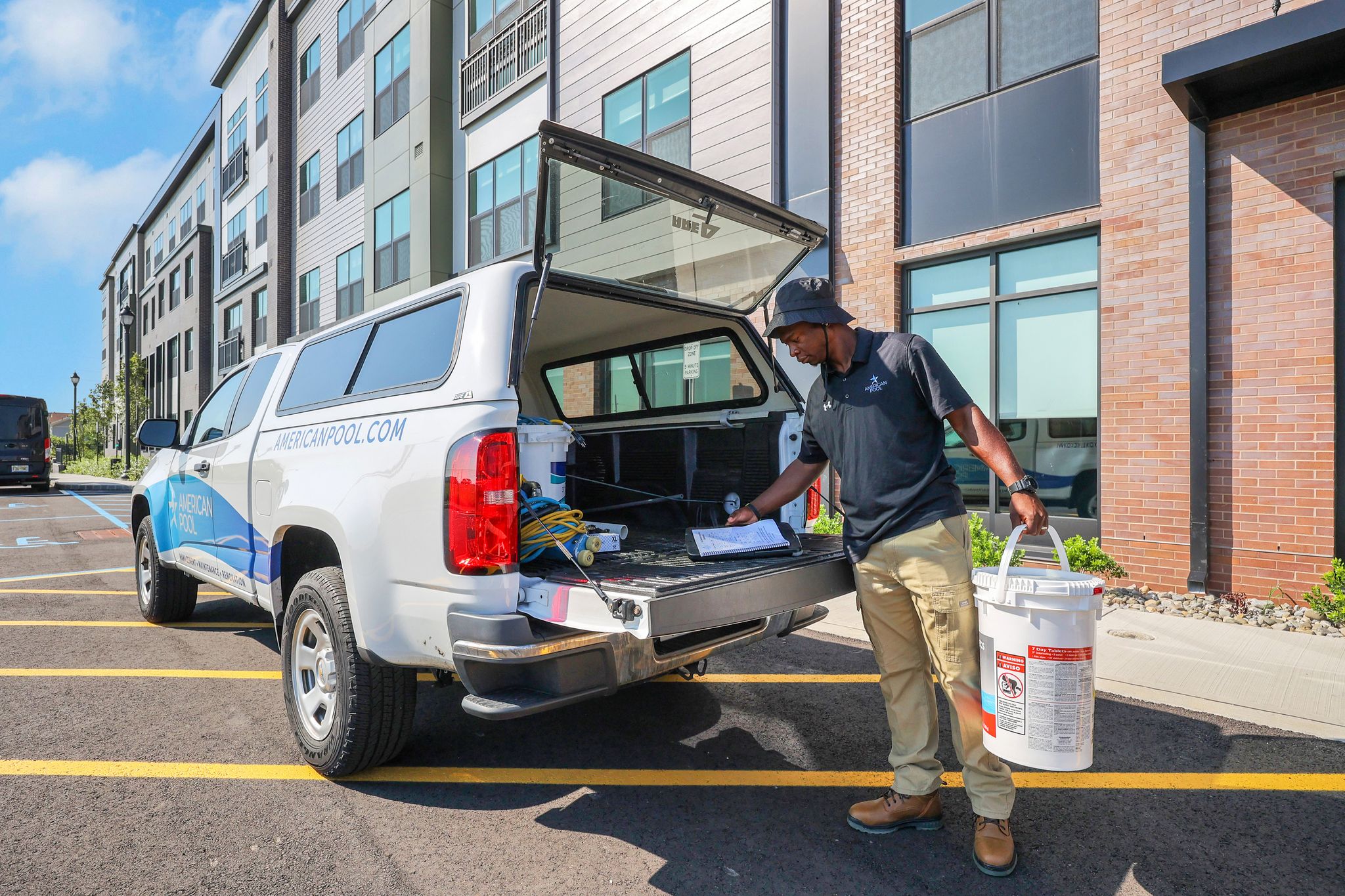
American Pool has managed the close-to-open cycle at more than 1,700 facilities nationwide since 1984, so closing is not a checklist we are improvising each September. Our teams balance the water, winterize the equipment, secure the cover, and document the facility’s condition before we leave the site, and that record is what we hand your board when spring planning starts.
The pools that open cleanly in May are, almost without exception, the ones that were closed properly in September. If your facility doesn’t have a plan for the next few weeks, now is the time to make one.